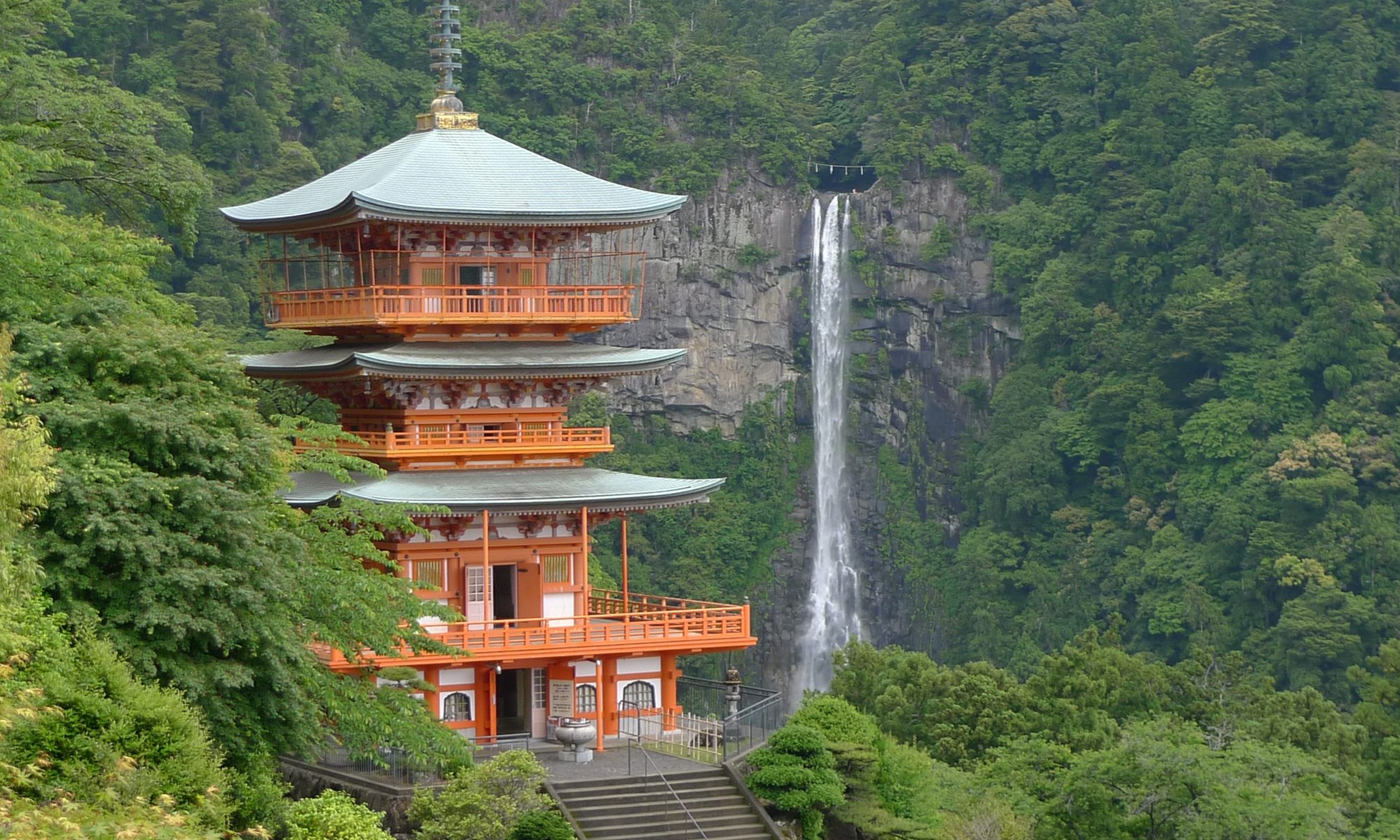
After returning from the underworld, the god Izanagi, who with his wife Izanami created the islands of Japan, performed a ritual purification to cleanse himself. During this process, three powerful deities were born. Among them, the radiant sun goddess, Amaterasu, was given control over the heavens, while her younger brother, the storm god Susanoo, was assigned the seas. Grieving for his mother Izanami and dissatisfied with his role, Susanoo caused chaos and destruction. As a result, Izanagi banished him.
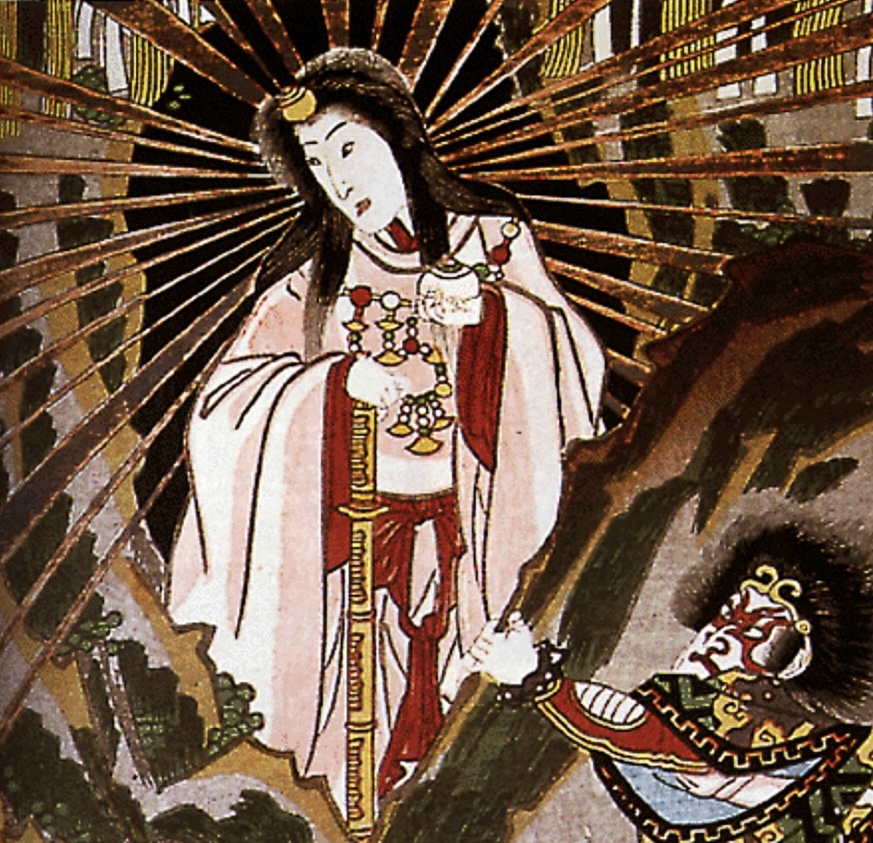
Before leaving, Susanoo went to bid farewell to his sister. However, his reckless and violent behavior terrified the gods. Fearing his aggression, Amaterasu hid inside a cave, plunging the world into darkness. To restore light, the gods held a lively festival outside, featuring dance and music. They lit bonfires, played joyous music, and a goddess performed a captivating dance. When Amaterasu peeked out in curiosity, they pulled her from the cave, bringing light back to the world.
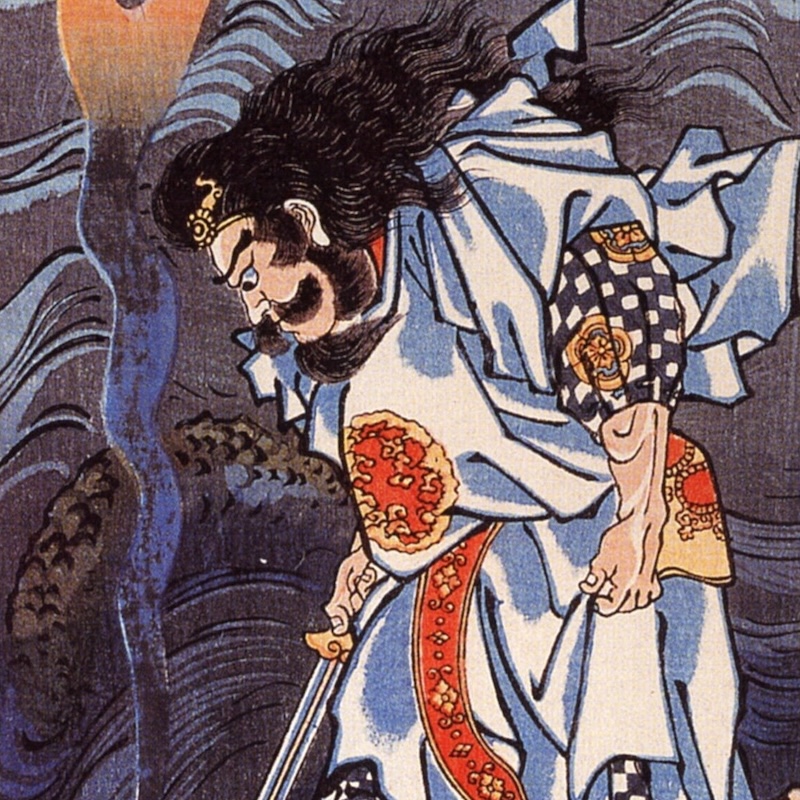
Cast down to the earth, Susanoo wandered to a distant land, where he encountered a fearsome eight-headed serpent that plagued the people. He devised a plan, defeated the creature, and rescued a young maiden, whom he later married. While cutting open the serpent’s body, he discovered a legendary sword, later named Kusanagi-no-Tsurugi (“Grass-Cutting Sword”). This blade would become one of Japan’s Three Imperial Treasures, symbols of the Emperor’s divine authority and Japan’s cultural heritage.
This myth highlights the struggle between chaos and order, the triumph of heroism, and the sacred origins of Japan’s rulers.
Aki’s Note
The gods I’ve highlighted in bold on this page are really important, so it’s a good idea to remember them.
The story of Amaterasu hiding in the cave is a famous myth in Japan, and it’s often seen as a way to explain eclipses. It’s a well-known tale that many people in Japan are familiar with.