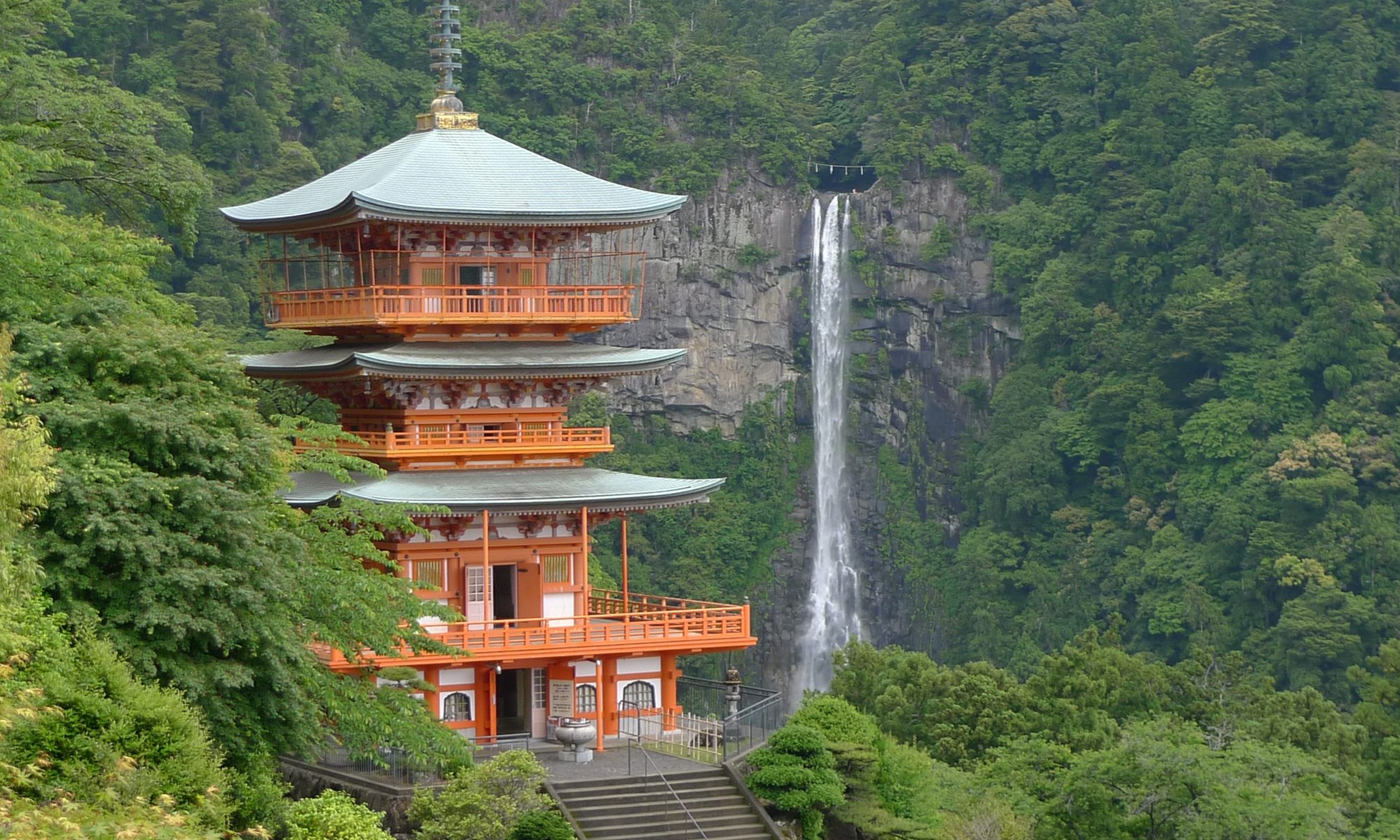
In ancient Japanese mythology, the world began as a chaotic, shapeless mass. Over time, the heavens and earth started to separate, and the first divine beings emerged to bring order. Among them were Izanagi and Izanami, two sibling deities entrusted with the task of creating the land.
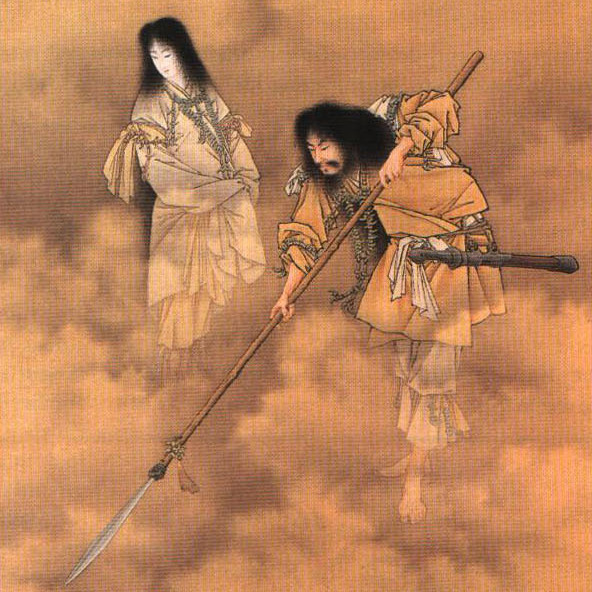
Standing on a floating bridge in the sky, they stirred the ocean below with a sacred spear. When they lifted it, droplets fell and formed Onokoro Island, the first solid land. Descending to this island, they became husband and wife and together gave birth to the Japanese islands and many gods of nature.
However, tragedy struck when Izanami gave birth to the fire god, suffering fatal burns in the process. She passed away and descended into Yomi, the underworld of decay and darkness. Heartbroken, Izanagi traveled there to bring her back, but when he saw her decayed form, he fled in horror. As he escaped, he sealed the entrance with a massive boulder, forever dividing the worlds of the living and the dead.
To cleanse himself from the impurity of Yomi, Izanagi performed a purification ritual. During this process, three powerful deities were born:
- Amaterasu, the radiant sun goddess, destined to become the ancestor of Japan’s imperial family.
- Tsukuyomi, the moon god, associated with the night.
- Susanoo, the storm god, known for his wild and uncontrollable nature.
This myth explains the origins of Japan’s land, its gods, and key Shinto beliefs, such as purification rituals and the reverence for natural forces. It also reinforces the belief in the divine origin of Japan’s imperial family, a concept that has played a significant role in Japanese culture and history.
Aki’s Note
The gods I’ve highlighted in bold on this page are really important, so it’s a good idea to remember them.
Out of the three gods born from Izanagi, Amaterasu and Susanoo are super important and you’ll see them pop up a lot later on. But, just so you know, Tsukuyomi? He’s pretty much a one-and-done deal. He won’t be making any more appearances.