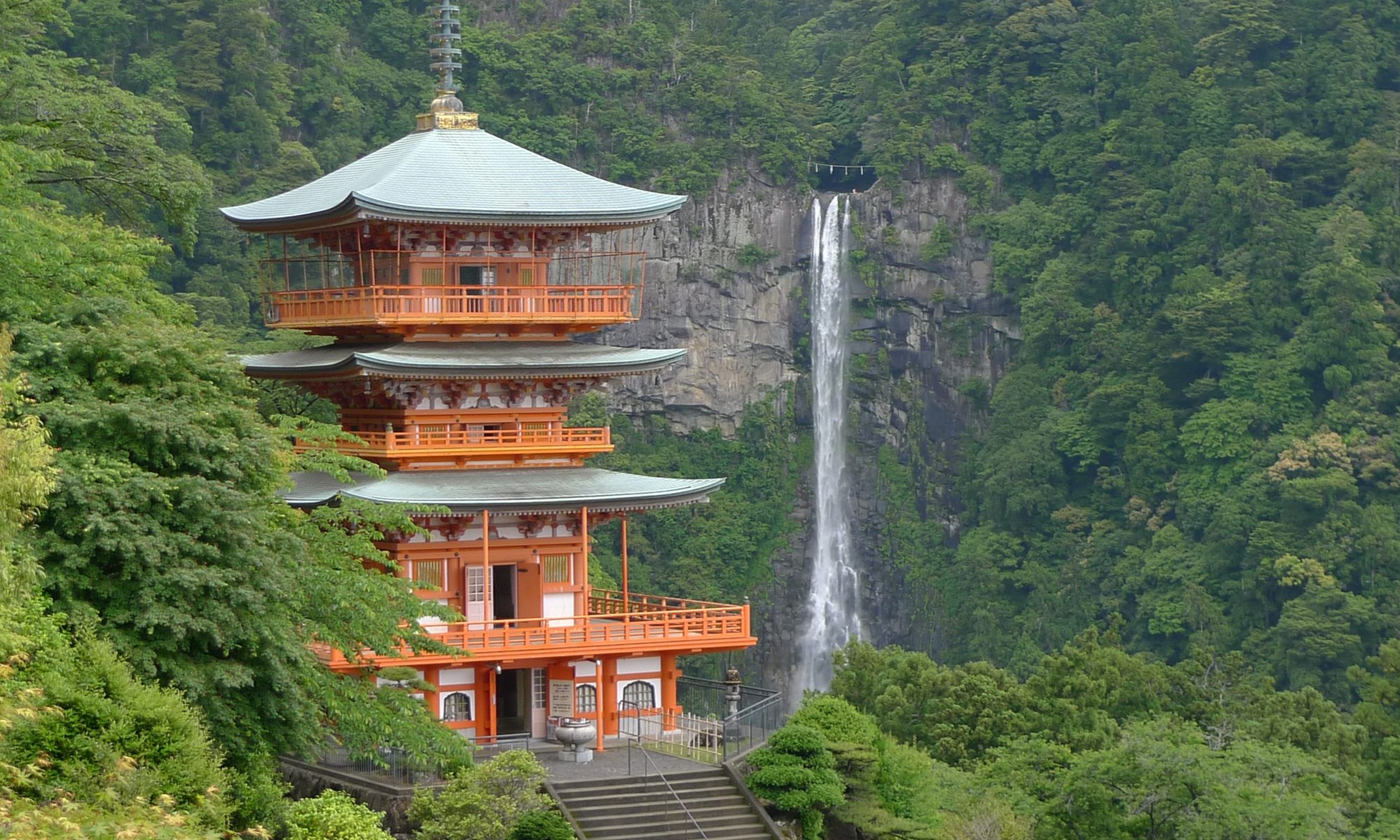
The sun goddess Amaterasu wished for her divine descendants to rule the land of Japan. To fulfill this, she bestowed upon her grandson the Three Sacred Treasures and sent him down from the heavens to govern the earth. This event, known as “The Descent of the Heavenly Grandson,” saw him guided by other deities as he descended to Hyuga (modern-day Miyazaki Prefecture, in southern Kyushu) and began ruling the land. Generations later, one of his descendants, later known as Emperor Jimmu, was born.
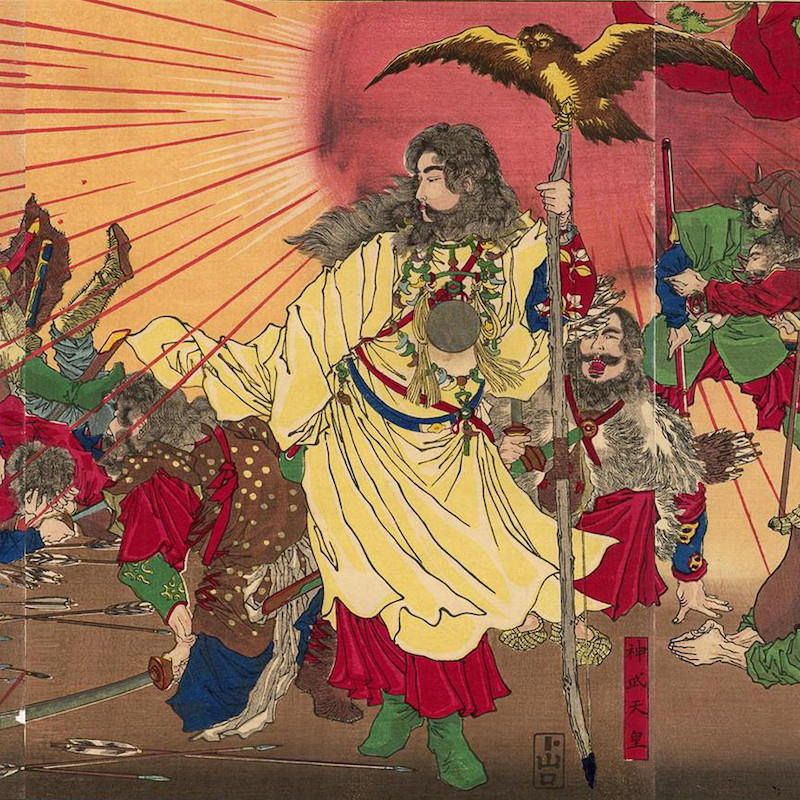
Seeking a more prosperous and central land, which was believed to be the ideal place to unify the nation, Jimmu decided to journey eastward to establish his rule. This journey, called “The Eastern Expedition of Emperor Jimmu,” was a military campaign to expand his influence from Kyushu to the Yamato region (modern-day Nara Prefecture), which was considered an ideal location for ruling Japan. Leading his forces, Jimmu faced fierce resistance, particularly in the Osaka area, where powerful local chieftains opposed his advance. Suffering heavy losses, he retreated and devised a new strategy: he used a maritime route to bypass the strongholds in Osaka. He led his army southward, circled around the Kii Peninsula, and then approached Yamato from the east.
Using this strategy, Jimmu successfully overcame local resistance and established control over Yamato. He then ascended to the throne as Japan’s first emperor, marking the beginning of the imperial lineage. This myth not only explains the origins of the Japanese imperial family but also symbolizes the divine legitimacy of the emperors and has shaped Japan’s cultural and political landscape for centuries. Today, Emperor Jimmu is honored as the legendary founder of Japan, and his legacy is still celebrated in Japanese culture.
Aki’s Note
The gods I’ve highlighted in bold on this page are really important, so it’s a good idea to remember them.
“Yamato” originally referred to a region in present-day Nara Prefecture, which was the political and cultural heart of ancient Japan. This area was home to Japan’s earliest imperial rulers and played a key role in unifying the nation. As the influence of this region grew, “Yamato” came to symbolize all of Japan, eventually becoming an ancient name for the country itself. Even today, the term carries historical and cultural significance, often used to evoke traditional Japanese heritage.