The Jomon Period (approximately 16,500 to 2,300 years ago) is one of the earliest cultural phases in the Japanese archipelago. During this time, people lived as hunter-gatherers and fishers, relying on nature for their survival. The most distinctive feature of this period is Jomon pottery, which is among the oldest known pottery in the world. These clay vessels were decorated with rope-like patterns, giving the period its name—”Jomon” means “cord-marked” in Japanese.
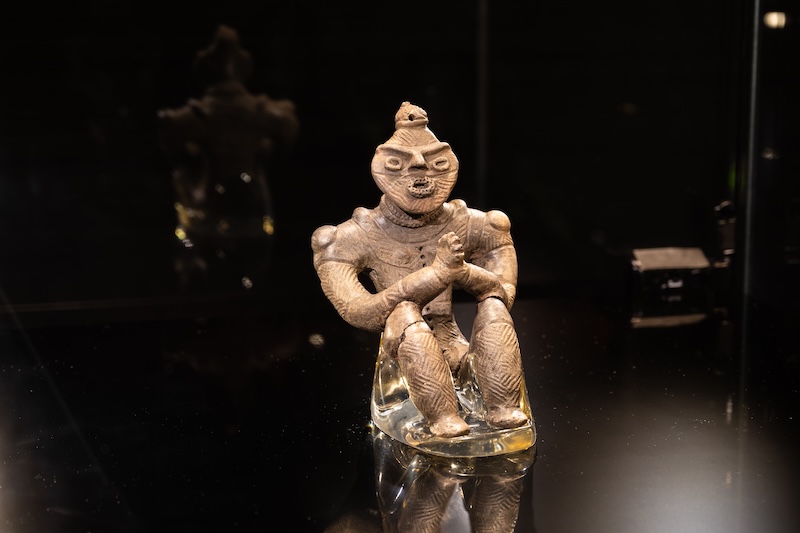
Unlike many other hunter-gatherer societies that were largely nomadic, the Jomon people developed a semi-sedentary lifestyle. They lived in pit dwellings—simple houses dug into the ground—forming small settlements. Their diet consisted of acorns, chestnuts, and other nuts, as well as deer, wild boar, and various fish and shellfish. Archaeological sites contain large shell mounds, providing evidence of their fishing practices. The Jomon people also created dogu (clay figurines) and stone rods, which are believed to have been used in religious rituals related to nature worship and fertility beliefs.
Toward the end of the Jomon Period, rice cultivation, which had been spreading from mainland Asia, began to take root in Japan, leading to a major social and technological transformation. This transition marked the shift to the Yayoi Period, when agriculture became the primary means of subsistence. However, the exact time frame of the Jomon Period (16,500–2,300 years ago) remains a subject of debate among archaeologists, as new discoveries continue to reshape our understanding of Japan’s ancient past.
Many aspects of Jomon culture—such as a deep connection with nature, spiritual beliefs and practices (including nature-based rituals and ancestor veneration), and craftsmanship—laid the foundation for later Japanese traditions. Even today, traces of Jomon heritage can be seen in elements of Japanese culture, from traditional craftsmanship to spiritual practices.